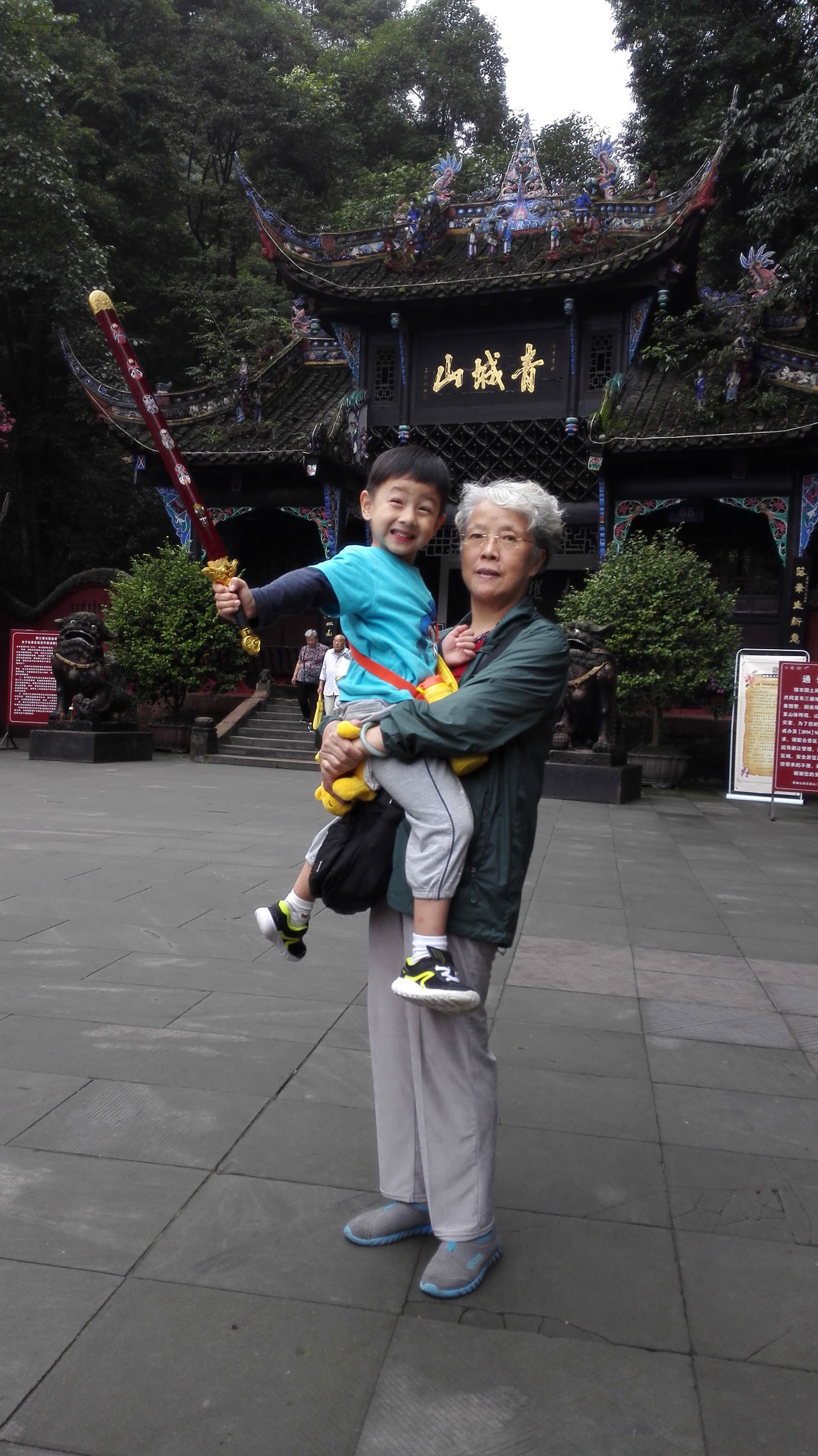
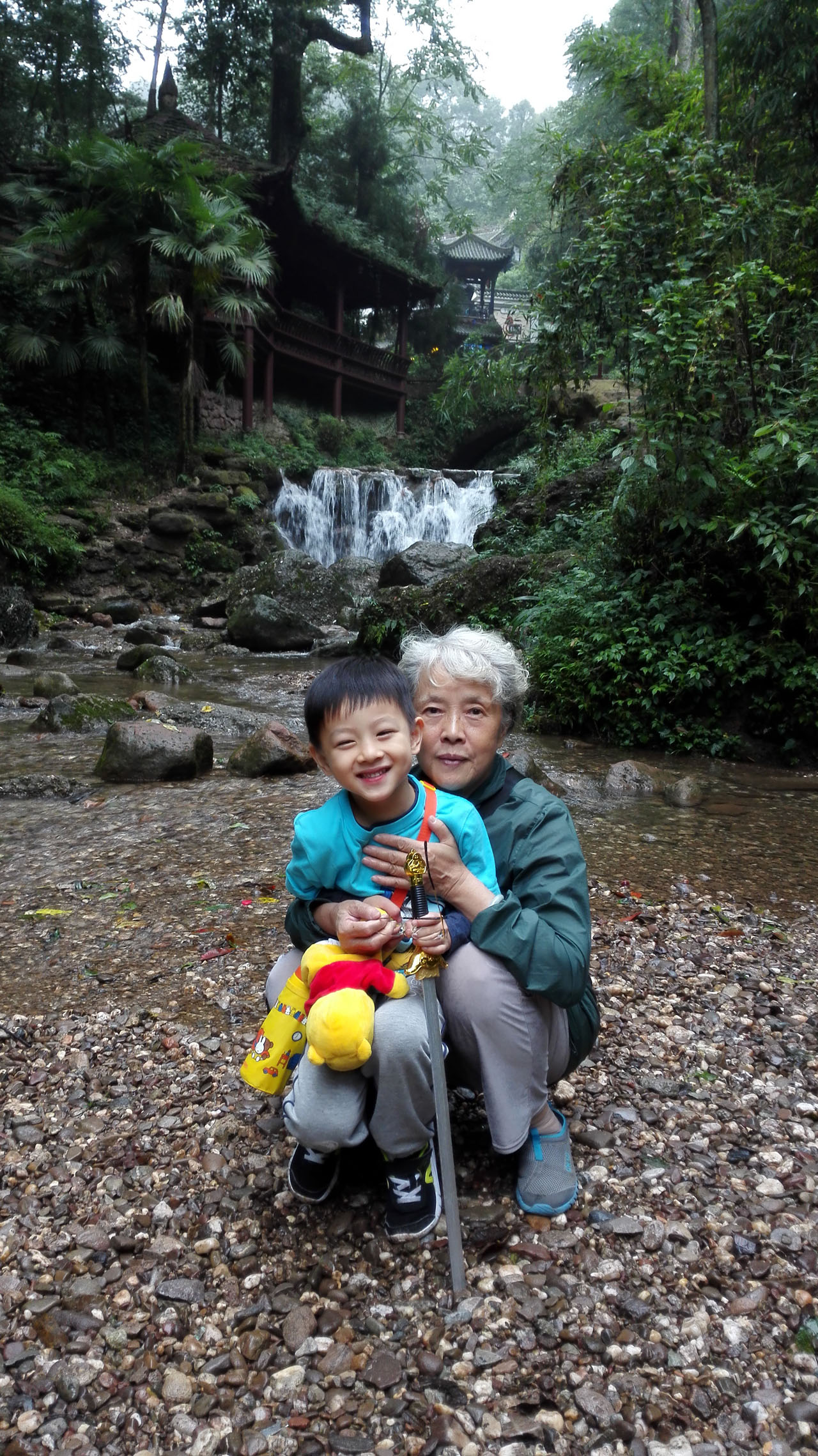
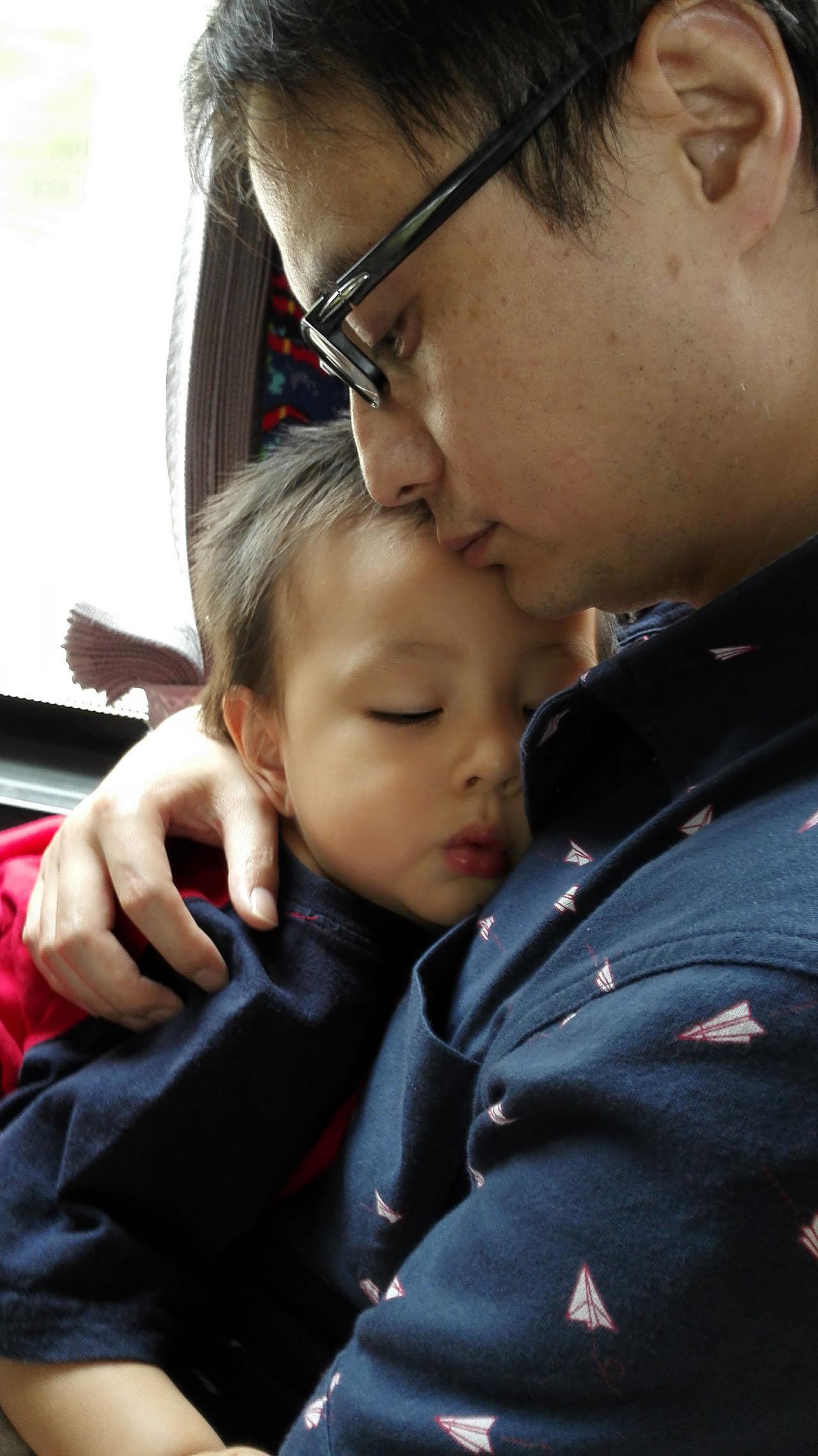
September 29, 2019

Woke up in the middle of the night, abruptly, snapped to conscience as if thrusted back into the confinement of three dimensions by violent momentum of a screeching halt, a result of a mechanical default maybe, say a weight on conscience from the daytime, inconspicuously but sinisterly lodged in the corner of mind and not properly identified and dealt with before the tram of sleep took the descent into the realm of dream on the track of time. In the penumbra state of conscience it took some finesse and a couple of tries to hitch myself back onto the continuum of time-and-space, like attempting to jump back onto a moving train before recovering the balance from the fall. First to trace the peripherals of the body with the mind, and when succeeded proceeded to carve it out from the rest of the nebulous heat of the night, delineate a safe harbor in the perilous undercurrent of inky air for memory to moor — Presently I Remembered it is time to take Maomao’s temperature again.

May 13, 2018

人生第一試,看来智商沒有遺傳到爸爸。

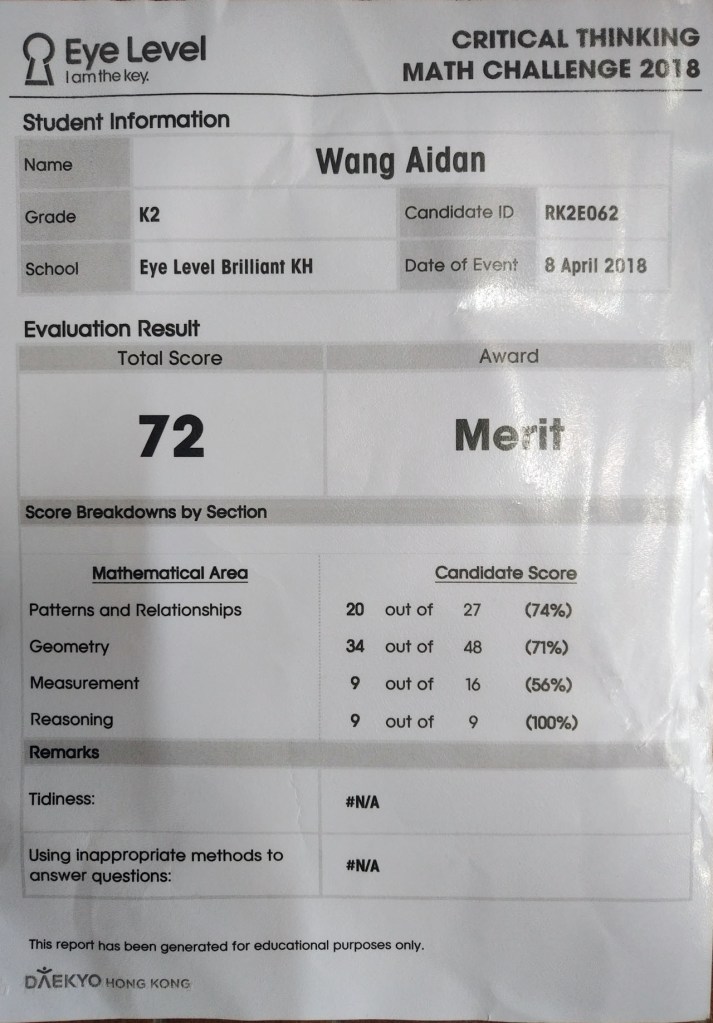
昨天收到Victoria的拒信,十幾家國際學校面試基本上全軍覆沒,都是第一輪都沒過。主要問題是完全不聽招呼,任何事情喊他多少遍都當耳邊風,照做他自己的事情。去圍棋課,英語課,數學課和網球課都被老師投訴。都是一開始都很喜歡他,可是後來完全不能manage. 上次去英語課家長會,老師說,If it’s just him not following my instruction I can handle, but other kids follow his behavior too and suddenly the whole class in in riot, I just can’t have that. For example I told him not to pour all the food out during break, he kept pouring it and looked at me while he was doing it, as if saying what are you gonna do about it? 網球課也是,教練跟他說,this is a place to learn, if you don’t respect me then you are not welcome here. 說了三遍,我坐在旁邊不高興了,站起身來把他拉走了。

只有個ESF的offer。那天去ESF Quarry Bay School面試,本來是面試waiting list,貓貓進去了以後,老師來要家長談一下。輪到我們的是副校長,問我們,對孩子有什麼期望。我說,“I recently read Samuel Butler’s The Way of All Flesh, and one sentence really resonated with me: ‘If a man has done enough in art and music to make me feel I can trust him with my life in a time of crisis, then he’s successful in my eyes.’ ” 副校長聽了,跑去教室坐在貓貓旁邊看他畫畫,下午就直接給了offer。要不然真不知道到哪上學。

February 7, 2018

During the month I read “The Road”, the first cold wave of the winter hit Hong Kong and Maomao fell with a fever that quickly shot over 40 degree Celsius. At night I set alarms to take his temperature every hour and half, and it took me a while to fall asleep again every time. As I laid in the dark listening to his breath, hot and heavy like that of a wounded little monster trying to break through some invisible wall, I thought of the opening sentence of the novel in which the man woke up in the dark and cold of the woods and reached out for his son sleeping beside him. Or maybe I dreamed that scene, having sunk into REM so quickly due to exhaustion without even realizing it. And I thought how frail it is this thing we call staying alive, in particularly together, just a man and his son through the night, in an all-out apocalypse or a mere cold spell.

In the morning on the subway, having left Maomao at home to recuperate, I found myself ruminating over the last scene of the man. I kept imagining what was going through his mind as he closed his eyes on the world for one last time. Was he at peace at last, having exhausted every ounce of his own existence to prolong that of his son, unrelentingly, always more unrelentingly than the onslaught of the apocalypse as long as he could and did hack it, till the last breath? Or was he drowning in sheer terror in realizing that his wife was right all along, that in the end he could not help but left his son to die alone out in the open, most likely in some unimaginably gruesome fashion, and all the more cruel on his part because he chose to raise him into a conscious human being capable of experiencing and understanding such inhumane horror and pain?

It’s not by design that I picked up “The Road” right after “The Way of All Flesh”, and it surely didn’t help the crippling doubt that seeped in through that long and often tedious read. Many times I had lashed out on Maomao due to impatience or worse frustration totally unrelated to him, and quickly tried to ameliorate the guilt by some ad hoc and self-righteous justification. But theoretically, that’s something one can strive to atone, something that unbounded love and vigilant self-restraint can hopefully prevail over. What McCarthy did here is an ultimate denunciation of love’s delusion and fallacy. Like any tragedian worth his salt, he presented that love so beautifully and movingly before shattering it right in front of your eyes. Love, as we may call it, in its most bare-bone and courageous form, is at the same time hubris and selfishness, at all time: what makes you think your love can triumph over the evil of human nature? In the typical, ruthless McCarthy fashion (think of “the kid” in Blood Meridian in the end), he killed the man, and left the silent accusation hanging in the cold and dark air before dawn: Look at your son. what have you done, what now. But the ending, so faint-hearted and jarring with the rest of the book, is in itself an admittance of defeat and a parody of the weakness of human nature — even he, who brought to life “the Judge” that still terrifies me to my wit’s end whenever I think of it, cannot bring himself to properly kill off the boy.

It’s probably inevitably morbid to call the book beautiful. Yet time and again I admired the man, not when he was fighting off a gang of cannibals to save his son but when he stood in the bleakness of a dead world and saw beauty:

“Dark of the invisible moon. The nights now only slightly less black. By day the banished sun circles the earth like a grieving mother with a lamp.”

“He walked out in the gray light and stood and he saw for a brief moment the absolute truth of the world. The cold relentless circling of the intestate earth. Darkness implacable. The blind dogs of the sun in their running. The crushing black vacuum of the universe. And somewhere two hunted animals trembling like ground-foxes in their cover. Borrowed time and borrowed world and borrowed eyes with which to sorrow it.”

“He thought each memory recalled must do some violence to its origins.”

“Years later he’d stood in the charred ruins of a library where blackened books lay in pools of water. Shelves tipped over. Some rage at the lies arranged in their thousands row on row. He picked up one of the books and thumbed through the heavy bloated pages. He’d not have thought the value of the smallest thing predicated on a world to come. It surprised him. That the space which these things occupied was itself an expectation.”

Reading these excerpts over and over again I thought the apocalypse setting notwithstanding, it is in the end the same and only thing that is in a father-son relationship: hurling a man’s memory into the future, “carrying the fire”, always remembering being a human and how it is to be one. Two nights ago as I put Maomao to sleep we somehow got into the abstract notions of genealogy. He asked, “Who’s grandpa’s dad then?” I said, “My grandpa. My grandpa is the dad of your grandapa.” He was like, “Huh?” and started laughing. He kept trying to repeat what I said and couldn’t and found it enormously amusing. This went on for a good five minutes before he got tired and snuggled up to me and closed his eyes in satisfaction. Holding him I thought of the last words of the man:

Look around you, he said. There is no prophet in the earth’s long chronicle who’s not honored here today. Whatever form you spoke of you were right.

The man took his hand, wheezing. You need to go on, he said. I cant go with you. You need to keep going. You don’t know what might be down the road. We were always lucky. You’ll be lucky again. You’ll see. Just go. It’s all right.”
January 01, 2018

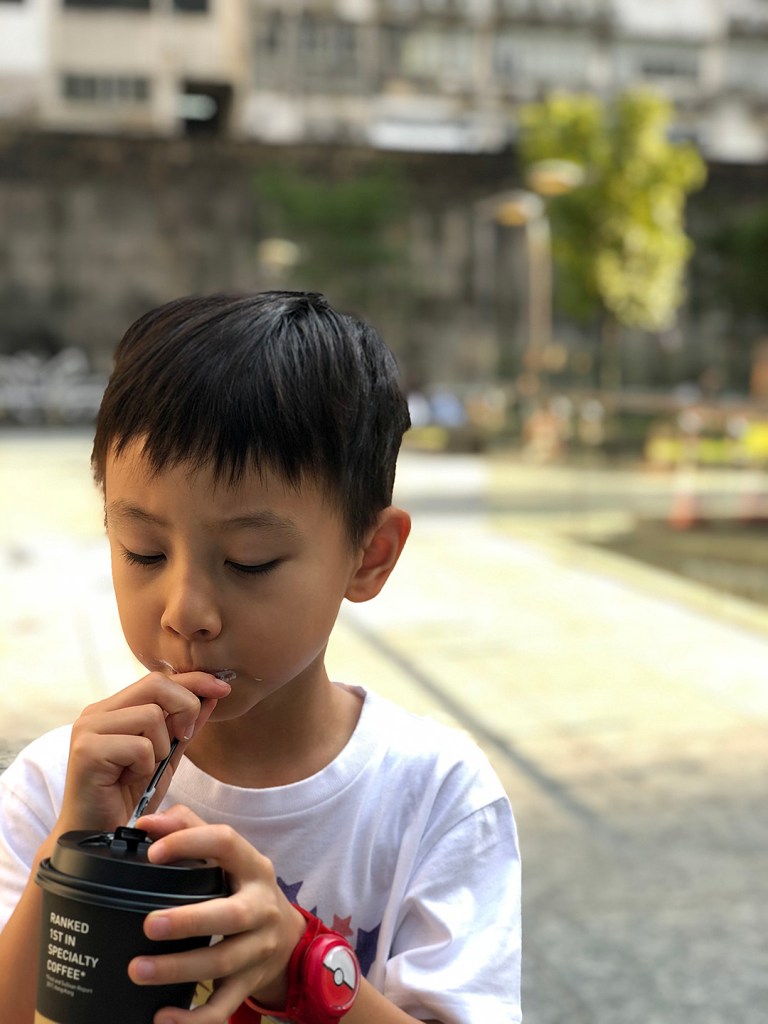
“The Way of All Flesh” is a book that’s good to read, in a similar sense that broccoli is said to be good to your health. You probably nod along the way, and all-in-all you are glad you read it after you read it, but it’s also highly likely that at no point during the reading you truly enjoyed it. I found the writing style rather bland, in spite of occasional attempts at British humor. The protagonist, Ernest, to me is unrelateable, if not unlikable. It’s never clearly stated what it was that his godfather and aunt saw in him that set him apart from his supposedly utterly despicable siblings, not a word was said about his literature talent until suddenly he became this avant-garde publishing writer in the very last part of the book. To summarize the plot of the book, basically it’s a laundry list of how Ernest screwed up his uninspired life at every turn in fittingly banal manners, until at last he duly inherited the big sum of money, at which point he abandoned his children to total strangers and spend the rest of his life traveling alone and publishing books nobody read.

But plot points are not the point here, it’s the subject matter that matters. Samuel Butler displayed his wisdom in an impressively calm and confident manner, through his analyses of the father-son relationship in the Victorian Era, and what he said remains highly relevant today, to the point I constantly felt obliged to take a step back and think about my ways of handling Maomao as I read through his often scathing commentaries:

“To parents who wish to lead a quiet life I would say: Tell your children that they are very naughty—much naughtier than most children. Point to the young people of some acquaintances as models of perfection and impress your own children with a deep sense of their own inferiority. You carry so many more guns than they do that they cannot fight you. This is called moral influence, and it will enable you to bounce them as much as you please. They think you know and they will not have yet caught you lying often enough to suspect that you are not the unworldly and scrupulously truthful person which you represent yourself to be; nor yet will they know how great a coward you are, nor how soon you will run away, if they fight you with persistency and judgement. You keep the dice and throw them both for your children and yourself. Load them then, for you can easily manage to stop your children from examining them.”

Now, every time I try to discipline Maomao and rationalize my (what must seem to him) sudden flare of anger with him, I think about this passage and can’t help feeling like a fraud. It never occurred to me before to imagine how Maomao must have felt from the receiving end when I lost my temper and yelled at him, how terrifying my face must have looked when I bared down on him. Yet the vague awareness that at such moments he would take the tirade spewed from the red face out of sheer anger all as literary truth is enough for me to make full abuse of it. Reading this paragraph is thus like being caught read-handed for cheating.

I often think that my love for Maomao, the kind of exuberant and self-negating love, has many elements that are rudimentary to faith. One beef I always have with religious people is the (admittedly often unintended) air of superiority, stemming directly from the absolute certainty that they are in the right. It’s my instinct to always be open to counter arguments, to have the baseline assumption that there is no absolute truth, especially when it comes to personal choice. But with Maomao I can now see that such certainty does have the potential to bestow happiness and fortitude in the face of adversity. And it makes devotion and sacrifice an indisputable pleasure. It goes against a person’s basic survival instinct and you almost look forward to opportunities to sacrifice yourself for his sake, big or small. But the absolute certainty that you are doing the right thing is of course at all time counter-weighted by the crippling doubt of not knowing if you are doing it the right way. The way that is supposedly intended by the object of worship, or if it “pleases the God.” “Common sense” is a moot concept to faith, not being founded on rationality. Likewise I fumbled along with Maomao, making up rules and regulations on the fly and raising him on a generally ad hoc basis. I regret every time I yelled at him with the intensity I’d repent a sin. And trying to gauge his nebulous conscience feels equally futile to Job’s grapple with God’s intention.

September 01, 2017

It’s a day poised to be filled with meek sunshine and slow wind. Slow but assured, like the pace of a gigantic Trojan horse marching through the crack of time between summer and autumn, secretly impregnating the air with moist and chill. Another typhoon will hit the coast tonight but hopefully I will be landed by then, with Maomao probably half-asleep in my arm already but still teary for having to inexplicably leave 爺爺奶奶 again. I struggle every time to make him understand it is not an arbitrary cruelty tyrannically imposed on him by ME. He insistently demands knowing WHY, with increasingly confusion and defiance, as he instinctively senses the aggression of the habitual resignation to the rut of life into his cognition process.

March 05, 2017

Rudy. Soon I am old.

“The father and son faced one another across the stark declivity of their different heights, the man staring wordless at this incarnation of something he had imagined long before, in a different life; the child staring beyond at his virgin mother.”

— The Recognitions

I saw the scene so vividly in my mind’s eyes, and as I dragged the highlight across the sentence it felt like a ritual of burning a mark on the memory. The images of both Gwyon and Wyatt materialized for the first time and crystallized in their respective silent forms of that instance, and would time and time again resurface from subconscience and haunt me for the rest of book.

With Maomao, three and a half now, it’s a mighty struggle on a nightly basis, to overcome a simultaneous surge of affection and exasperation and emerge, in apparent difficulty, with either a plead in affected calmness, or a command of ad-hoc sternness, equally futile — he just goes on doing whatever he is doing, blissfully ignoring me. Without a word to me he charges forward gallantly in the quest of blazing a trail of his identity on this world. He talks to himself, and his toy cars and farm house, and the newly acquired pair of live fishes with a self-assurance that’s as cute as unnerving, conjuring up a world and dismissing it all in the procession of a half sentence. Caught off guard, I hurry after him and frentically try to assemble a semblance of strategy.

And I thought how differently it is with Dad. The first time (well maybe after the first few times) I listened to Chopin’s Cello Sonata, each note instantly became a word Dad spoke to me that he did not, the whole piece a conservation we never had. We share everything we share through blood and gene, a semblance runs from the similar faces to quirky moods. I gave Maomao his name partly because Dad’s love for 圍棋. Every time I go back home we spend afternoons watching broadcast of matches on TV, without a word. Dad plays violin but never bothered to teach me, I did not learn that he read Borges in his 30s until I was in mine. Yet a (sub-)conscious effort to imitate him runs through my adult life, the way he is at ease with his life, the careless way he does things, good or poorly no matter, the Grace.

Meanwhile, Maomao, three and a half years old, is all his own little man. Seeking my approval never seems high on his priority list. At times it is so clearly that he is probing me, with that peculiar mixture of childish slyness and innocence, and I feel hopelessly out of my depth. To every answer he follows up with another “why”, eventually calling my whole adult existence into crippling doubt with that single word. This morning I took him to the beach as usual. I kept asking him not to go up to the lifeguard tower and of course that was his cue. He sent me to retrieve a bucket of water, and when I turned around from the wave of course there he was on the top of the spiral stairs, waving and beaming at me. I was not sure which urges to suppress first, to laugh or yell.

January 31, 2016

On weekends I have two choices for coffee: a chic Espresso Royale with black fixtures except for a red sofa by the window, or a dingy barista cafe which brews drip Yirgacheffe that’s inspired by rainy afternoons (it opens at 12pm and closes before dark). It’s almost a cliche then that the Americano at the Espresso Royale tastes marginally better than tap water filtered through charcoal and the barista cafe sits in a dump, a hardware store on the left and a meat market to the right, on a back street where most of the buildings face away, probably to avoid the sight of the Plastic wraps and cigarrete butts, profusely littered around backdoors covered by so many “No Smoking” signs it feels like a raging red revolution. When I leave for the Espresso Royale in the morning I generally offer to take Maomao along, usually he will come for the coconut milk, blueberry yogurt or car magazines but today he said he didn’t want to cause it was too cold outside (it is a good 10 degree warmer than last Sunday). So I found myself sitting by the window for an hour, not taking the rare opportunity though to read a book (it’s impossible with Maomao in tow) but contemplating idly how a two-and-half year old processes cause-effect analyses and strings coherent words to match them.

After lunch he slept for two and a half hour straight, probably still recovering from the hiking yesterday. During that time I took a nap myself, searched and found the particular edition of the Holderlin collection online, downloaded it, flipped through it, enormously satisfied, loaded it onto my kindle, and eagerly waited to read it tonight after Maomao sleeps (which will probably be well after 10pm since he slept so much in the afternoon). What’s more amazing though was I managed to tear myself away again around 5pm, offering to take him outside for a late-afternoon coffee run at the precise moment when I knew he would say no: as he was tearing ferociously at a foil wrap of a pack of ginger biscuits. So I came to the barista cafe, listened to some nocturne, read a few pages of Holderlin and littered a few cigarette butts of my own, and called it a particularly Lucky Strike.

May 03, 2015

Adagio Sostenuto — Allegro

I wonder why every portrait of Beethoven depicts him with, or rather, imposes on him, this invariable look of fury, with deeply furrowed brows and eyes staring so intently — are those the very pair of eyes Rilke saw in his Apollo? But every time I listen to his cello sonata I think how these portraits do not do him justice. It gives me goose bumps, NOT by an eruption of triumph euphemism like the beginning of the fourth movement of No.5, but with sheer serenity, such serenity that is all encompassing, and such assurance, with warmth and understanding so close and personal.

Saturday we took Maomao on a trip to a seashore village. It was a gorgeous day outside the window, as the bus made its circles around towards the mountain top. When the bus made another turn, the ocean below sprung into view. You can look into so far in the distance where the clouds dissolved into a veil of mists even though it’s a perfectly sunny sky, and when the ocean held in its blossom such a blueness it became an entity living and breathing, a kind of transparency that was so substantive, so indisputably existing. I pointed out for Maomao a yacht that was cutting across the surface of the ocean with spreading white waves like an intentive stroke of water color that soon dissipated into the fibers of the canvas, and found he fell asleep on my lap, holding on to me with his arms and legs like a baby koala sleeping on a tree trunk. I instinctively stiffened my posture, and looked out of the window again. Silently breathed the vast scenery into me, I encompassed it and internalized it, understood it, and pressed it into Maomao’s mind through my chest where he rested his chin. He will see the vastness of the ocean and sky in his short nap, internalize it and understand it. And in my mind I played the cello sonata, let a shudder washed over me, and thought how Beethoven had miraculously anticipated this moment, when we are together, here.

May 02, 2015

Saturday we took Maomao on a trip. It was a gorgeous day outside the window, as the bus made its circles around towards the mountain top. When the bus made another turn, the oceans below sprung into view. You can look into so far in the distance where the clouds dissolved into a veil of mists even though it’s a perfectly sunny sky, and when the sea held in its blossom such a blueness its became an entity living and breathing, a kind of transparency that is so substantive, so indisputably existing. I pointed out for Maomao a yacht that was cutting across the surface of the ocean with spreading white waves like an intentive stroke of water color that soon dissipated into the fibers of the canvas, and found he fell asleep on my lap, holding on to me with his arms and legs like a baby koala sleeping on a tree trunk. I instinctually stiffened my posture, and looked out of the window again. I silently breathed the scenery into me, encompassed it and internalized it, understood it, and pressed it into Maomao’s mind through my chest where he rested his chin. He will see the vastness of the ocean and sky in his short nap, internalize it and understand it. And in my mind I played Beethoven’s cello sonata, let a shudder washed over me, and thought what a miracle that Beethoven had anticipated this moment, when we are together here. And I also remembered Rilke:

We can go this far, this is ours.
The gods can press down harder upon us.
But that’s gods’ affair.

March 17, 2015

Day One

I buried myself in “Madness and Civilization” while listening to “These Foolish Things” on an endless loop, and surprisingly enjoyed the three-hour flight back to Beijing. “Madness that is the deja-la of death” to go with “the wind of March that made my heart a dancer”. It’s probably better to turn schizophrenia before fell by Alzheimer. The sun went down on my left side in the process.

It’s not that I’m particularly interested in the historical development of Looney pens in Europe through the dark age, I probably already forgot what was said on one page when I flip to the next, but it’s a well written essay printed on premium quality pages with a pleasant opal tint, and I, like John Cusack said, “just want to listen to something I can ignore.”

In the car home I felt asleep a bit and when I woke up we are already off the highway. The cityscape outside the moving window was properly lit for a March night that was already turning balmy. I listened to “wild strawberries only seven francs a kilo” and thought how Maomao keeps saying “蓝莓! 蓝莓!” if you ask him what his favorite food is. He does not have a favorite food actually, he puts anything, edible or not, in his mouth with equal enthusiasm and anticipation. And I realized this was probably the first time I thought of him during the course of day. Thought of calling for a sec but he should be sleeping by now. How I always looked forward to nine o’clock every night when it’s finally time to put him to bed. I turned off the music. The driver who is always friendly chatty with me remained professionally distant behind the wheel, and together we raced home in silence proper.

March 01, 2015

Airport
I was staring out of the window in a blissful stupor ruminating idly how I’ve probably made one too many trips to the airport in the last month or so, when Dad breached the perfect silence and said, “So how’s life? Are you happy?” Giving the usual dynamic between us, it’s fair to count this as a curve ball thrown at close range. The first thought that came to me was how a little peculiar the timing of this question is, on the way TO the airport, after he had just spent two weeks with me. But Dad works in mysterious ways. Instantly I made an “oh well” mumble to stall for time while stealing a glance at the dashboard – I’m going 120km/h but I’m still 5km away from the tollbooth, so I’ll have to come up with Something. And the image of 貓貓 came to my mind, how would he react I wondered, 30 years down the road maybe, when he, driving me to the airport somewhere on a highway on a windy Sunday morning, is asked to give me a summary judgment of his life on the spot? And I realized this is not a conversation that could be sustained, if I say I Am happy then I will not know what to say next and if I say I’m not He will be at a loss for words instead.

When we walked out of the door Mom tried to get Maomao to kiss Dad goodbye but he waved his hand vaguely and rushed out to the corridor, leaving me holding his luggage in one arm and Maomao on the other. I was not sure if he was fighting back the choke in his throat or if he simply heard the ding of the elevator. Before that he spent the last half an hour holding Maomao on his lap listening to Radetzky March (not Kleiber’s, Karajan’s, which I didn’t approve) then the last movement of “From the New World”. He held Maomao’s hands in his and together they conducted the music from the armchair. I do that with Maomao too but his movement was much more natural and graceful, he even mixed in a few violin gestures which I cannot compete with. Eventually I grabbed the camcorder and recorded 2 mins of it. While I was doing it I was thinking, when Maomao watches this clip 30 years down the road maybe, will he also have the mental image of me, silent and attentive, standing behind the camera?

June 04, 2014

For some reason 貓貓 was a bit fuzzy this morning, so after breakfast Dad and I took him downstairs for some fresh air. The small garden was pleasantly cool at 8:30am, even though they hadn’t turn on that sorry excuse for a fountain yet. I brought “Professor Borges” with me, and sat under the tree reading the chapter on Coleridge. Borges sees Coleridge as a living (well, lived) manifestation of Frank Saltram, a life filled with frustration and vacillation, but mainly unfulfilled promises. I read the first few lines of his summary of the “Rime of Ancient Mariner”, and was about to skip to the next page when I heard Dad laughing at the other end of the lawn. I looked up, 貓貓 was pointing at the sky with his tiny index finger, and both of them were looking up at maybe some birds that had already vanished. Then 貓貓 said “O”! A crisp, perfect vowel. The only vowel he can manage so far but he got it down. I watched Dad laughing and remembered asking him at breakfast where he wants to have his birthday dinner tomorrow, he thought for a while and said “Something not too spicy.” I still remembered him loving spicy food, I guess the few times I sat down at dinner table with him in the last couple of years I just wasn’t paying attention. And I couldn’t remember seeing him so much at ease, in how many year? Ever since I came back to China, and before that it was over a decade of absence. But at least now I can go by this hearty laughter in the morning and that is not subject to change. I must have smiled unperceivably. Then as I watched his back when he helped 貓貓 tottering across the lawn, I came to realize I was watching him moving on into a realm that’s yet foreign to me, a realm free of weight of conscience, just pure joy and understanding, on the day before he turns 70. And of course 貓貓 will not be remembering any of this, he who hasn’t yet come into the world of men with a coherent stream of memories. So there I was, suddenly alone, left to bear a name in the sun, the keeper of the memory of a morning.